Instruments BY BRAS
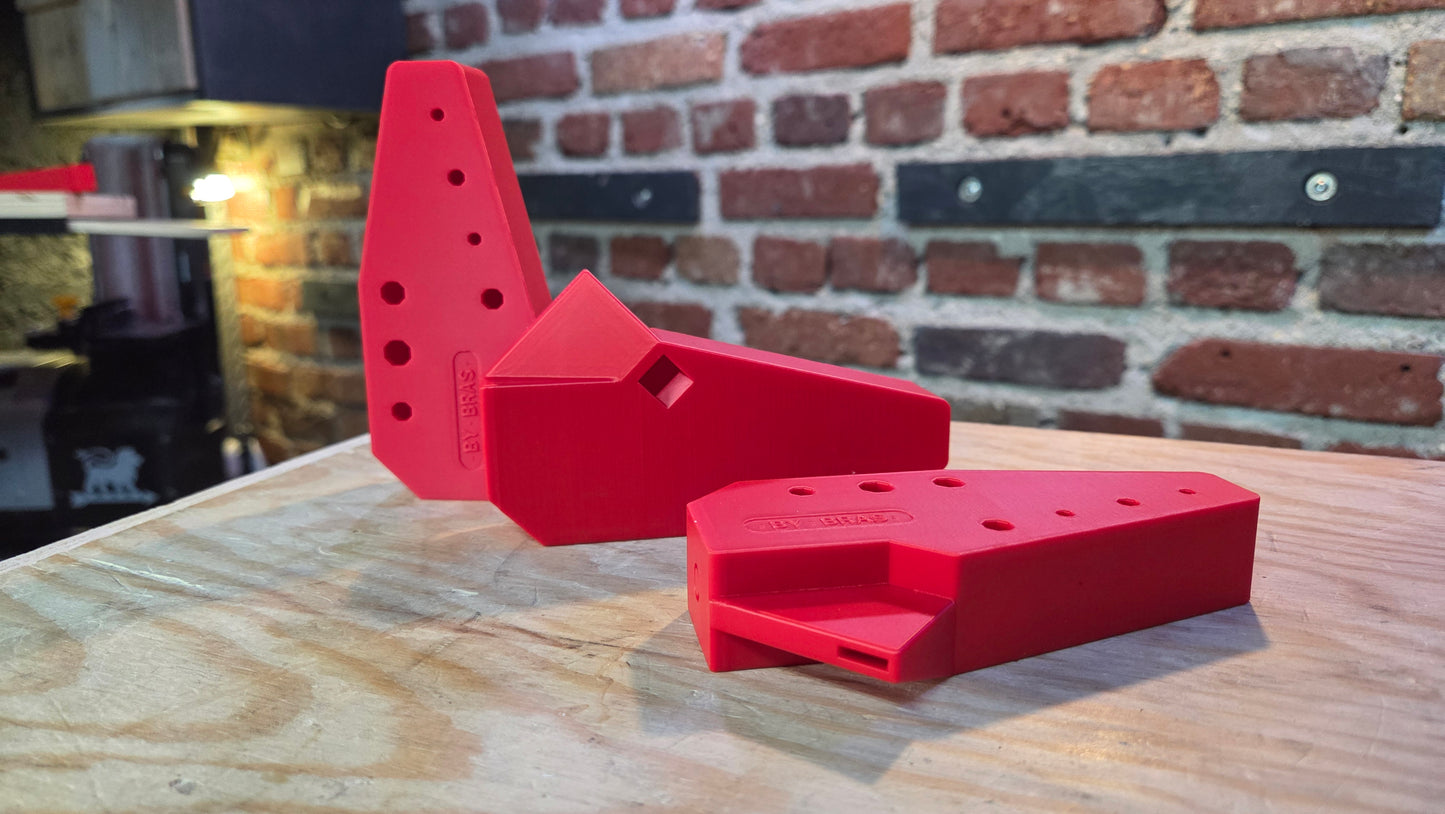
Ocarina in C5 BY BRAS — digital file for 3D Printing (STL)
Ocarina in C5 BY BRAS — digital file for 3D Printing (STL)
Couldn't load pickup availability
⚠️ FREE STL file, Digital product only
Add this free STL to your cart and order, you will receive the downloadable content.
This product is a digital file for 3D printing. No physical item will be shipped. You must own a 3D printer or have access to a local FabLab or makerspace to use this product.
Prefer a ready-to-use instrument?
→ This ocarina is also available as a physical 3D-printed product, ready to ship.
Ocarina in C5 BY BRAS — STL File
I’ve always loved ocarinas: unique sound and articulation, various shapes and tunings, and they fit into the pocket!
From an instrument maker’s point of view, it’s also a very fun instrument to design and build. The tuning process is very different from a pipe flute, and the hole positions allow much more freedom.
I tried to 3D print many of the ocarinas available online. There are some great designs and some very nice sounding versions, but the shapes are often difficult to print cleanly. The post-processing on round holes, sanding, filing, is never perfect.
Rather than copying a traditional ceramic ocarina, whose shape directly comes from its fabrication process, I wanted to rethink what a 3D printed ocarina could look like when designed specifically for this manufacturing method.
Here is the result!
This ocarina uses a geometry optimized for support-free FDM printing:
-
angled surfaces designed around printable overhangs,
-
octagonal tone holes that print cleanly without sagging,
-
an internal structure with clean bridges and simple wall geometry,
-
a compact one-piece body that prints reliably on most printers,
-
a simple and versatile parametric design that will allow me to easily explore new tunings and scales in the future.
A simplified instrument for musicians
I’m not a great ocarina player myself, and I don’t know how to play all the complex chromatic fingerings used on concert ocarinas.
While these systems are powerful in experienced hands, they can also make the instrument difficult to approach.
For this design, I intentionally chose a simpler layout.
The instrument uses a 7-hole fingering system covering one full octave with a smooth and balanced sound across the range.
The thumb holes on traditional concert ocarinas extend the range with two additional high notes, but they can also feel uncomfortable to play, and they often sound inconsistent depending on the craftsmanship of the instrument.
For this model, I chose to remove them, allowing a more comfortable playing experience, a more regular tone, and a more intuitive grip.
Even with this simplified layout, many additional semitones can still be discovered through cross fingerings and alternate finger combinations.
This makes the instrument easier to play while still leaving room for musical exploration.
A fingering chart is included with the download.
Designed by an instrument maker
I’ve been building instruments for more than 20 years now, mostly using recycled materials and adapting my designs to the objects and materials I could find.
3D printing is the first tool that truly gives me the power of an entire factory while still allowing an incredible freedom of shapes, acoustic systems, and experimentation.
I opened my workshop, La Fabrique, and created my brand and store, https://instrumentsbybras.com so I could share these instruments more widely and build a skilled team capable of taking on larger and more ambitious projects.
But 3D printing also comes with its own constraints. I find it fascinating to adapt my instruments specifically for this manufacturing process in order to optimize both the sound and the quality of the object itself.
This constantly pushes me toward new shapes, new ideas, and new acoustic possibilities. There is still so much left to explore.
Printing
-
No supports required
-
Optimized for standard FDM printers
-
Easy to print reliably
-
Beginner-friendly project
-
Compact print time and low filament usage
Recommended layer height:
-
0.1 mm (better result)
Recommended materials:
-
PLA
License included
Allowed use: – Personal use – Educational and workshop use
Not allowed: – Resale of the file – Resale of printed parts made from this file – Distribution of the file in any form
If you need a commercial license, please contact us.
Share